by Admin | Aug 10, 2025 | Artist Corner, Events, Latest, Pro.Files, Slam
Ehalakasa’s National Poetry Slam Prelims ignite the race to represent Ghana on the global stage in 2026.
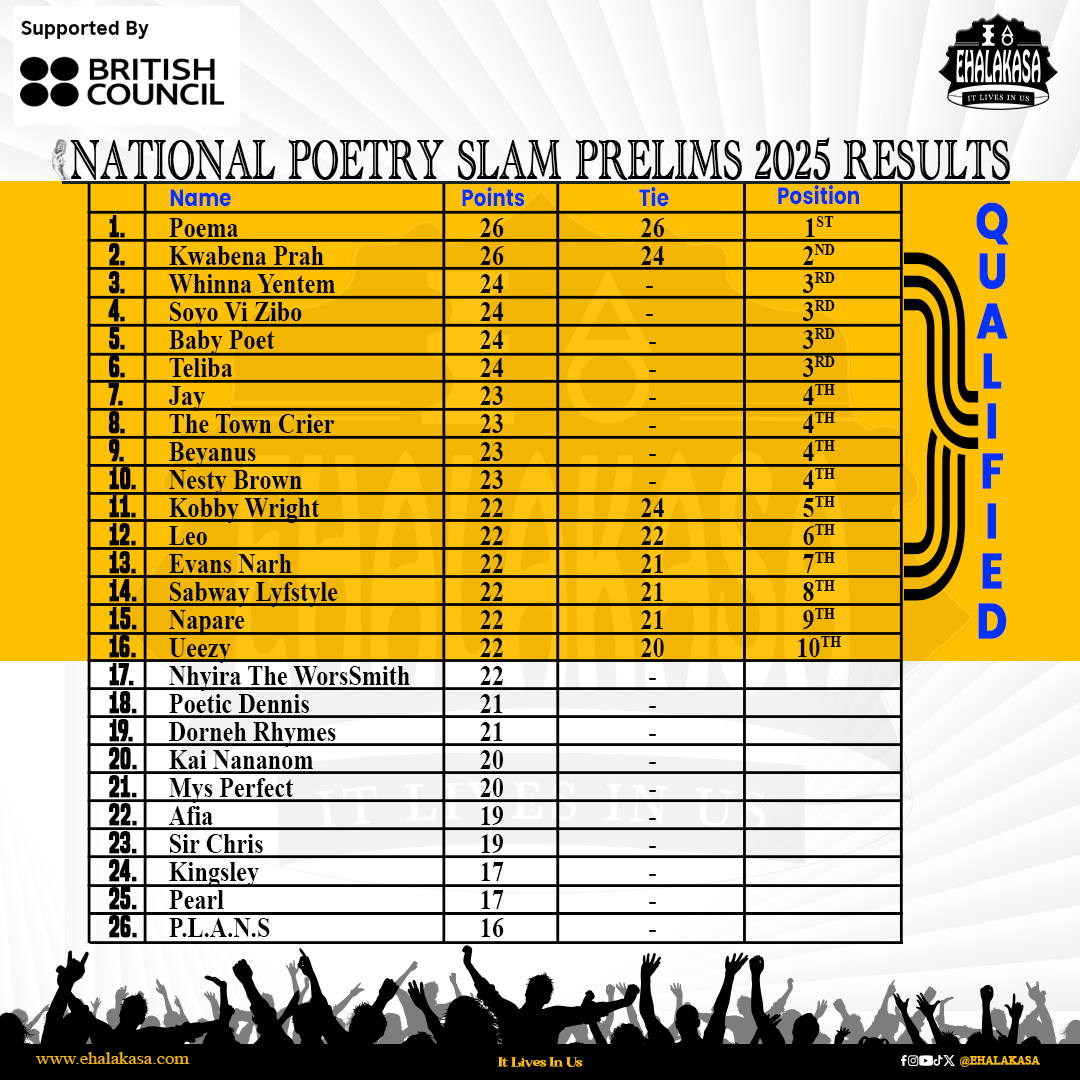
Accra, Ghana, August 9, 2025 The British Council Hall was alive with rhythm, rhyme, and raw emotion as 26 of Ghana’s finest spoken word artists battled for a coveted place in the National Poetry Slam Final. By night’s end, only 16 emerged victorious, inching closer to the ultimate prize the honour of representing Ghana at the 2026 World Poetry Slam Championship in South Africa.
In a contest where every syllable counted, Poema and Kwabena Prah led the charge with 26 points each, delivering performances that married precision with passion. Following closely were the equally captivating Whinna Yentem, Soyo Vi Zibo, Baby Poet, and Teliba, each securing 24 points and a joint third-place finish.
The list of finalists reflects a diverse blend of voices, from seasoned veterans to rising stars. Each poet brought their own lens to the stage, offering perspectives that cut across identity, politics, love, resilience, and social change.
“It’s more than just poetry. It’s a movement, a platform, and a chance to carry Ghana’s voice to the world,”said an Ehalakasa representative after the event.
The competition now shifts to the National Poetry Slam Final on November 1, 2025, where the stakes will be higher, the verses sharper, and the spotlight brighter. From that night, one poet will wear the national crown — and with it, the responsibility of championing Ghana’s slam poetry on the world stage.
Qualified Poets for the National Final (Top 16):
-
Poema (26)
-
Kwabena Prah (26)
-
Whinna Yentem (24)
-
Soyo Vi Zibo (24)
-
Baby Poet (24)
-
Teliba (24)
-
Jay (23)
-
The Town Crier (23)
-
Beyanus (23)
-
Nesty Brown (23)
-
Kobby Wright (22)
-
Leo (22)
-
Evans Narh (22)
-
Sabway Lyfstyle (22)
-
Napare (22)
-
Ueezy (22)
With the preliminaries concluded, the countdown begins. Who will rise on November 1st to carry Ghana’s poetic spirit to the world in 2026?
by Admin | Aug 8, 2025 | Artist Corner, Events, Latest, Pro.Files, Slam
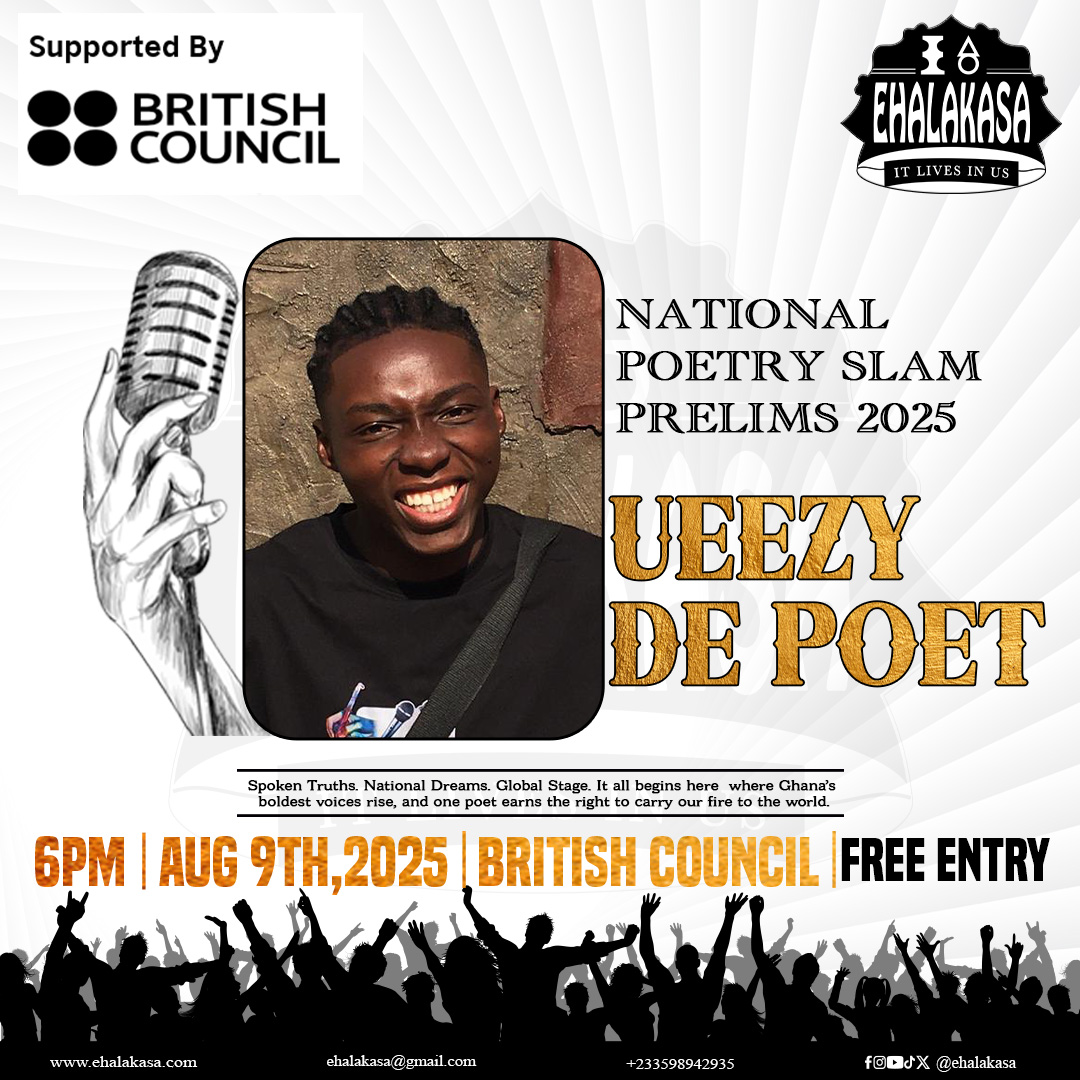
Ueezy de Poet, also known as Herman Jatoe, is not here for applause. He’s here to disrupt. To shake the silence. To put a rhythm to the realities so many try to avoid.
Emerging from the raw edges of Ghana’s urban storylines, Ueezy is part of a bold new poetic generation that doesn’t perform for validation it performs for truth. And that truth is often uncomfortable, unfiltered, and urgent.
His words cut through expectations like a hot blade through butter sharp, swift, and deliberate. Behind his bright smile lies a mind that has mastered the metaphor and a heart that knows how to make every syllable land like a fist or a feather depending on the moment.
On August 9th, 2025, at 6 PM at the British Council, Ueezy will take the mic at the Ehalakasa National Poetry Slam Prelims. The room may not be ready. But he is.
Whether he’s unpacking identity, spinning street slang into scripture, or challenging societal myths, Ueezy doesn’t just speak poems he lives them.
The slam stage is about voice, grit, presence and Ueezy de Poet brings all three in generous supply. This isn’t a performance. It’s a prophecy in progress.
by Admin | Aug 8, 2025 | Artist Corner, Events, Latest, Pro.Files, Slam
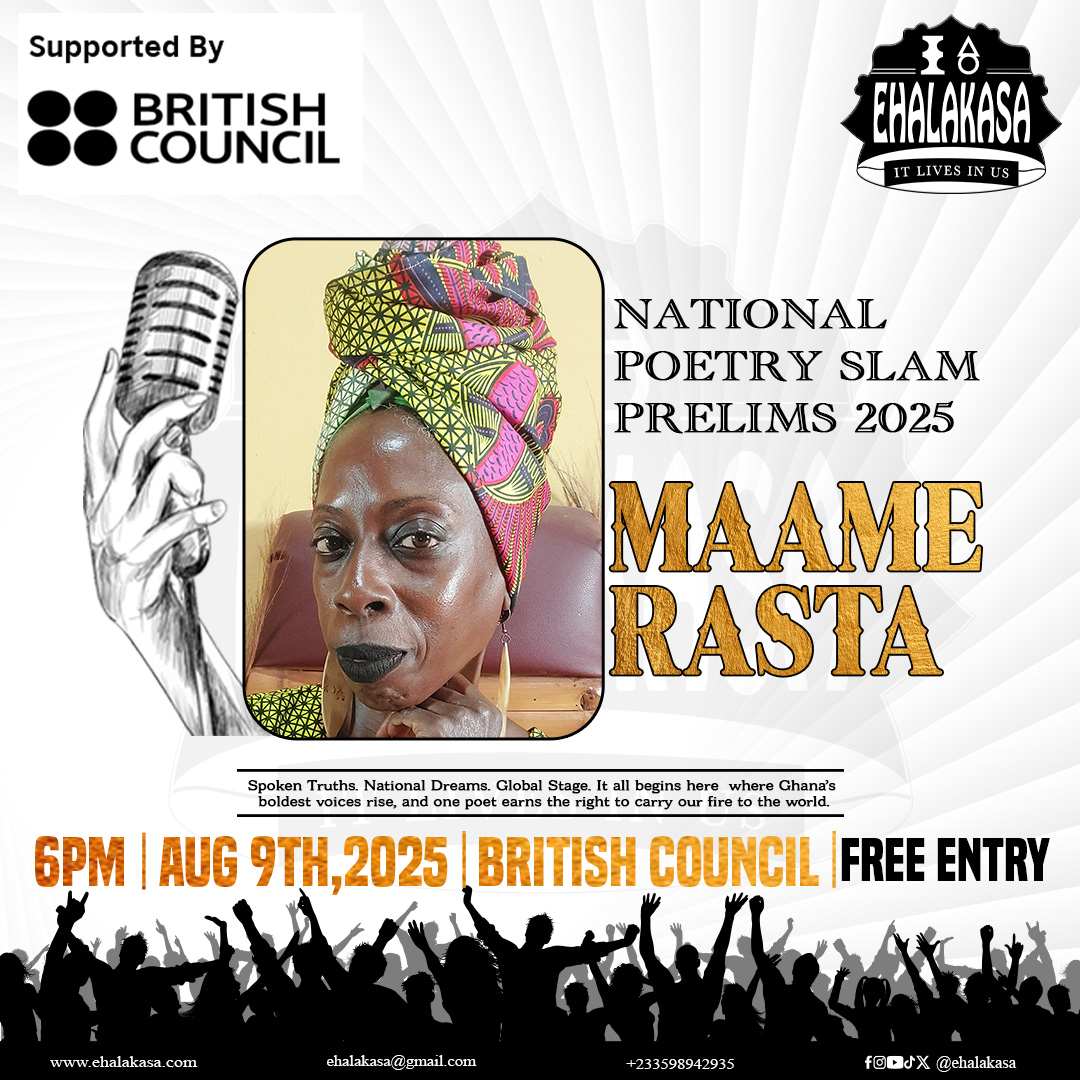
There are voices. And then there is Maame Rasta a cultural flame wrapped in fabric, fire, and fierce honesty.
Stepping into the Ehalakasa National Poetry Slam Prelims 2025 with the full power of her persona, Maame Rasta is more than a poet—she’s an institution. From her bold Afrocentric fashion to her defiant gaze, she commands attention before the mic is even on.
Set for 6 PM, August 9th at the British Council, this year’s prelims are already buzzing but Maame Rasta’s appearance has added a whole new layer of anticipation.
Unfiltered. Radical. Grounded. She embodies everything poetry was always meant to be: a rebellion with rhythm, a truth-telling drumbeat. Her voice is not just performance it is protest. A cry for justice wrapped in metaphor. A matriarchal wisdom that slices through noise. A spiritual chant rising from ancestral ground.
In a space where artists often chase applause, Maame Rasta reminds us: the stage is sacred, and words are weapons.
She enters the arena not to impress but to ignite to stir the embers of memory, history, and possibility. In her presence, poetry feels less like art and more like invocation.
This is no ordinary prelim. This is Maame Rasta’s roar. And Ghana will hear it.
by Admin | Aug 8, 2025 | Artist Corner, Events, Latest, Pro.Files, Slam
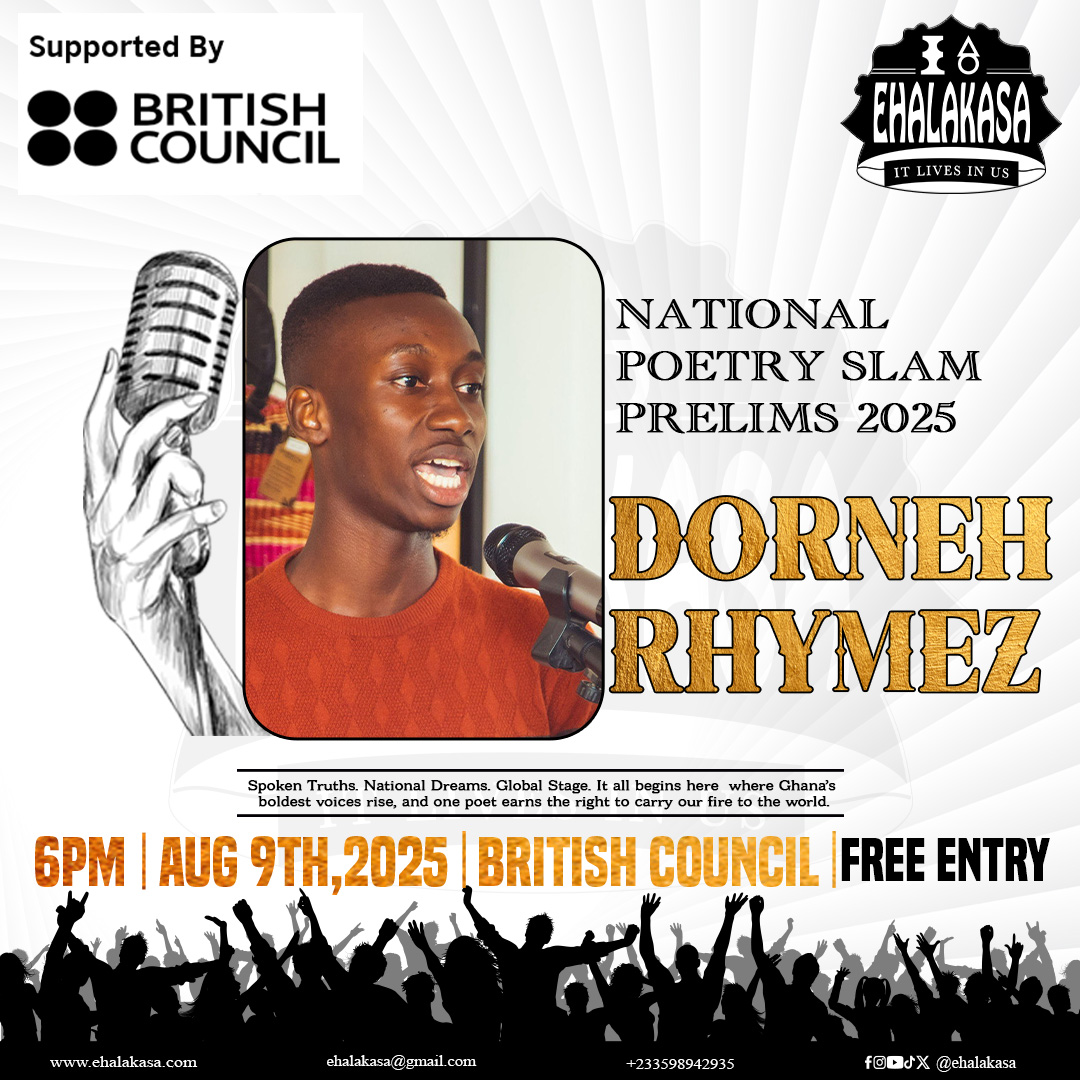
Some poets write to entertain. Others to provoke thought. Dorneh Rhymez does both often in the same breath.
A master of wordplay and wit, Dorneh wields poetry like a craftsman’s tool shaping verses that amuse, challenge, and endure. His work is a blend of mirror and megaphone: holding up a reflection to the world while amplifying the questions we sometimes avoid.
“I want my poetry to linger,” he says. “It can be lighthearted, but it should always leave a shadow of thought behind.”
From light jabs of humor to hard-hitting social commentary, Dorneh’s lines walk the fine line between art and advocacy. His captivating storytelling invites listeners in, while his clever puns make them stay longer than they planned.
In a world of fleeting attention, Dorneh Rhymez knows how to earn it and keep it. His poetry doesn’t just live in the moment; it travels home with you, quietly echoing long after the applause fades.
Whether on a bustling stage or in an intimate reading circle, he delivers words that connect, challenge, and charm proof that poetry can be both playful and powerful.
by Admin | Aug 8, 2025 | Artist Corner, Latest, Pro.Files, Slam
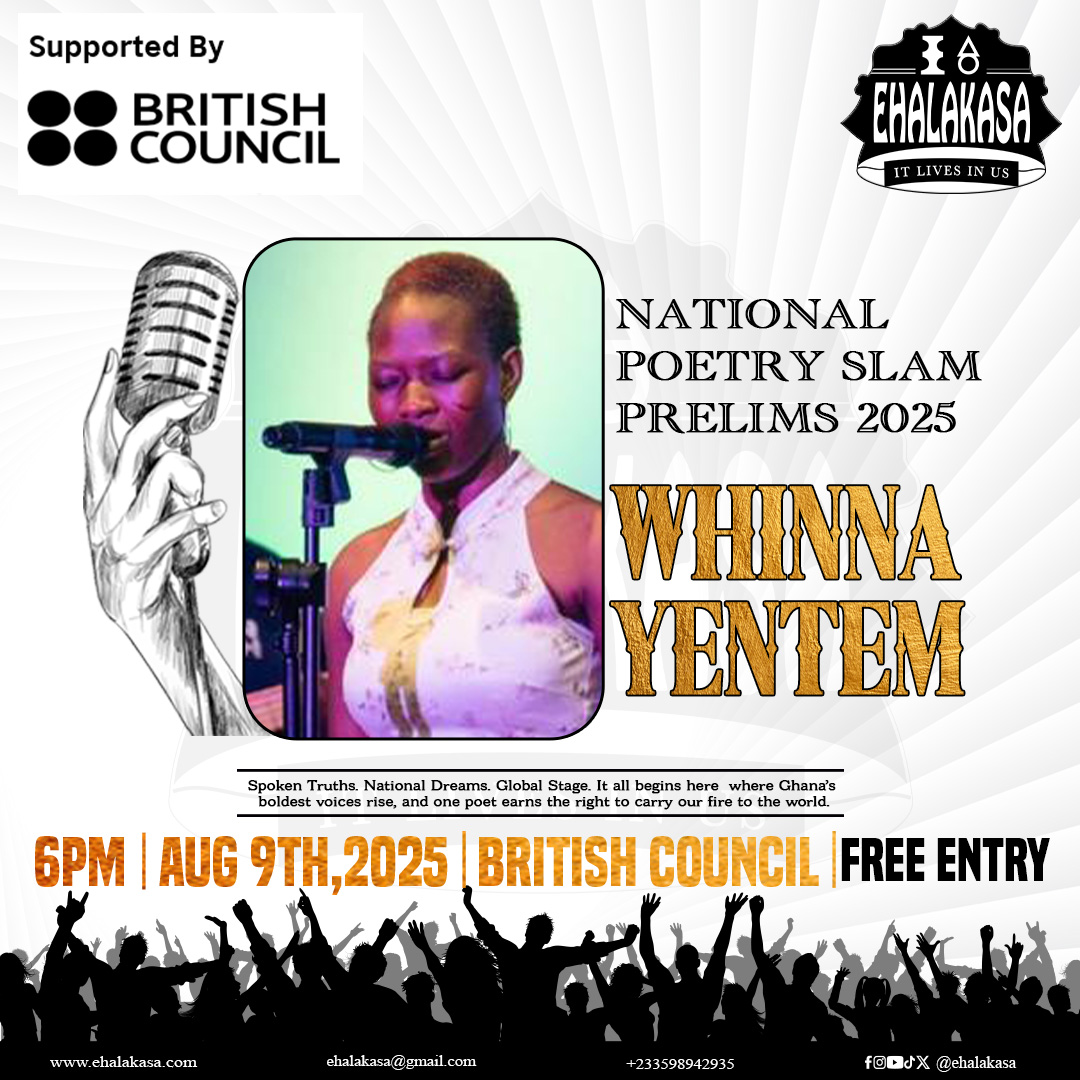
For some, poetry is a hobby. For Whinna Yentem, it’s a lifeline a way of speaking the truths that live in the quiet corners of the human heart.
Born Gbeng Gloria, the Ghanaian spoken word artist is more than a performer; she’s a story-weaver, motivator, and voice for the unspoken. Her dual worlds poet and veterinarian may seem far apart, yet both are rooted in care, empathy, and transformation.
“I believe poetry is the best way to express hidden emotions, address pressing issues, and motivate those who can relate,” she says. “It allows me to connect with people in ways everyday conversations can’t.”
In just two years since she began her journey with words, Whinna Yentem has evolved from playful experimentation with language to a confident artistic voice ready to stand on bigger stages. Her performances are intimate yet impactful, marked by her signature wordplay and her ability to blend vulnerability with power.
As a master of ceremonies (MC), her charisma commands rooms. As a poet, her verses open doors to reflection, conversation, and healing. Whether addressing social issues, sharing personal truths, or inspiring change, she delivers with a rare authenticity that resonates long after the mic goes silent.
Whinna Yentem is proof that artistry isn’t just about talent it’s about the courage to speak, the wisdom to listen, and the commitment to create bridges between hearts.
Her story is still unfolding, but one thing is clear: she’s ready for the world, and the world needs to hear her.
by Admin | Aug 7, 2025 | Artist Corner, Latest, Pro.Files, Slam
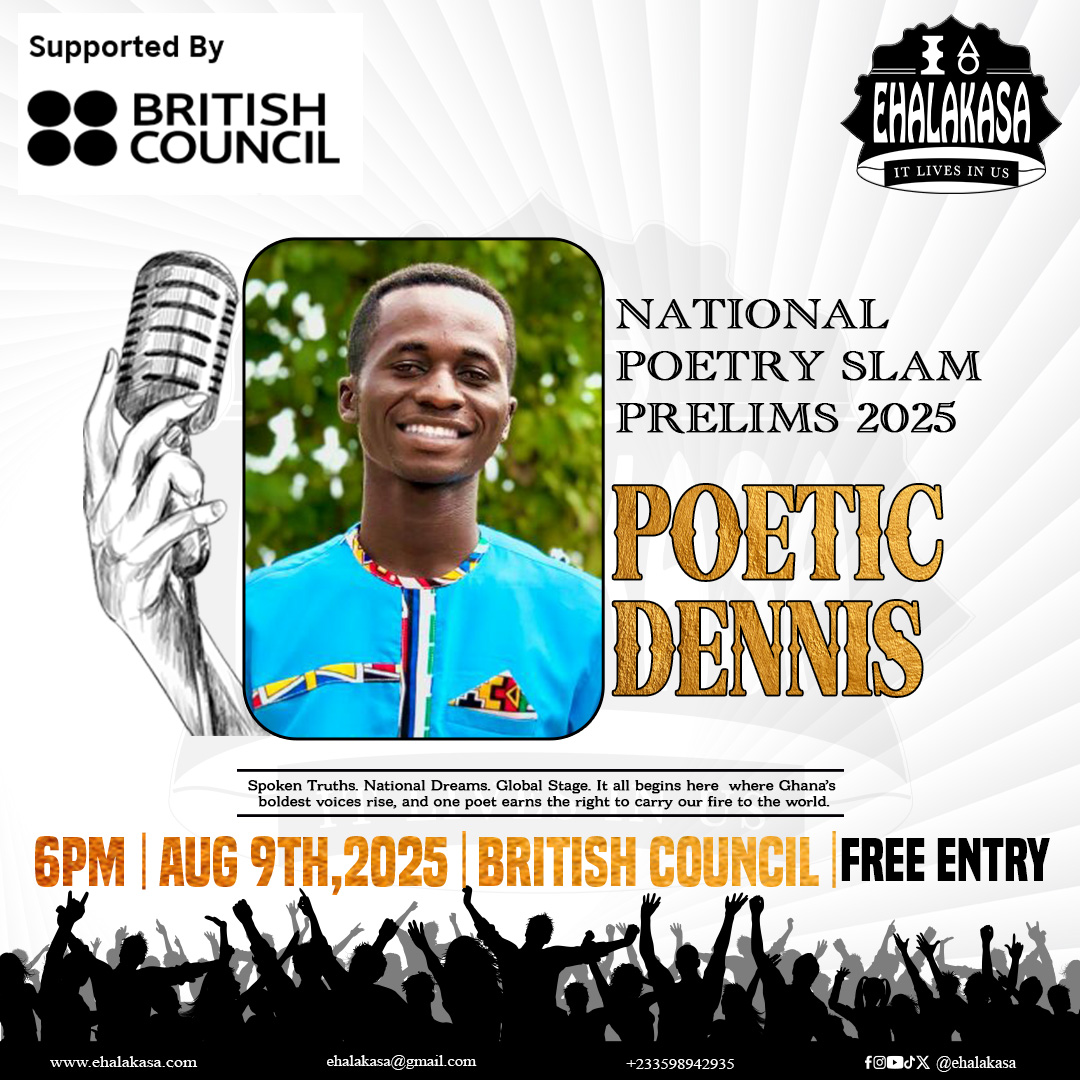
In a world increasingly shaped by artificial noise and fleeting trends, the quiet, resonant voice of Poetic Dennis cuts through not with spectacle, but with sincerity.
Born and raised in Koforidua, Dennis Aboagye has carved a space for himself in Ghana’s contemporary poetic landscape by choosing a path both profound and intimate: speaking directly to the heart of society.
“I believe poetry should reflect life,” he shares. “It must breathe with the same rhythm as the people.”
His work is neither abstract nor overly ornate it is grounded, intentional, and relatable. Inspired by the laughter, pain, struggles, and triumphs of everyday life, Poetic Dennis turns mundane realities into meditative experiences. His verses transform sidewalks into stages, and ordinary citizens into heroes of their own stories.
Dennis’s mission is clear: to inspire, not just impress. He doesn’t write poetry for the elite; he writes it for the mother at the market, the trotro driver in traffic, the child dreaming on a classroom bench.
His performances are known for their subtle emotional power, their natural rhythms, and their capacity to stir introspection without preaching. Through poetry, Dennis becomes a social mirror a witness, a storyteller, and a quiet revolutionary.
As he continues to gain momentum, Poetic Dennis represents more than just a name on a flyer. He symbolizes the rising generation of Ghanaian artists who are reclaiming the narrative using language not just as decoration, but as a vehicle for empathy, reform, and reawakening.
In a culture thirsty for authenticity, Poetic Dennis quenches with simplicity, sincerity, and soul.